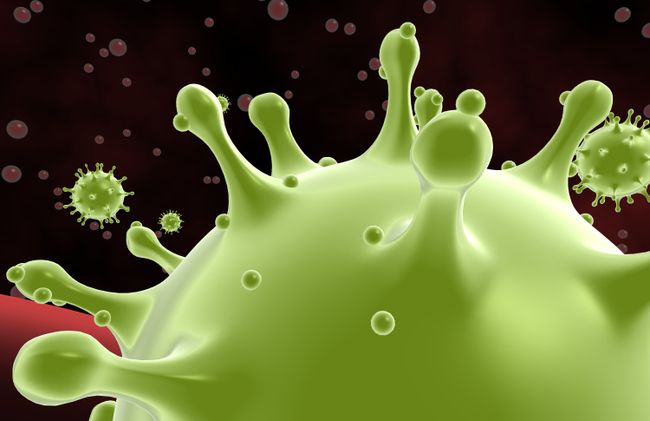
LIVE SCIENCE - March 19, 2020 | Empty, mocked-up shells of the new coronavirus, SARS-CoV-2, may help explain how well the virus stands up to heat, humidity and other environmental changes.
The research, just launched by physicists at The University of Utah, is designed to help public health officials understand how the new coronavirus will react as the seasons change. One major question about the virus, which causes a disease called COVID-19, is whether summer will do anything to slow the spread.
"Coronavirus spreads similarly to the influenza virus — as small mucus droplets suspended in the air … Viruses lose infectivity because the particles lose structural integrity," University of Utah physicist Saveez Saffarian said in a statement. "The physics of how the droplets evolve in different temperature and humidity conditions affect how infectious it is."
Along with physicist Michael Vershinin, Saffarian has just received a nearly $200,000 National Science Foundation (NSF) grant to study how the virus's protective outer shell responds to changes in heat and humidity. Viruses are not able to "do anything" on their own, as they are simply shells with genetic instructions tucked inside; when a virus invades a host's cells, it uses that cell's machinery to replicate itself, over and over again.