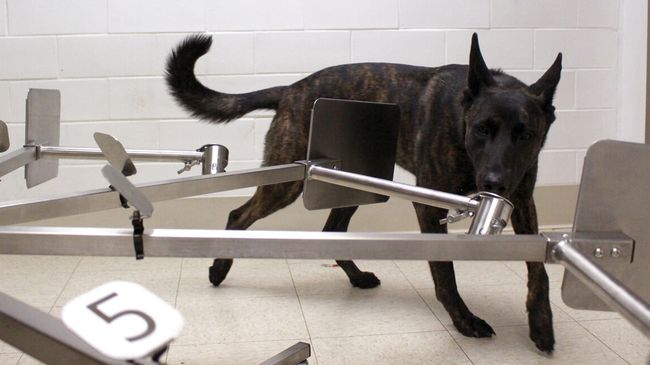
LIVE SCIENCE - May 1, 2020 | Scientists are training dogs to identify COVID-19 by following their noses.
A new program at the University of Pennsylvania's School of Veterinary Medicine (Penn Vet) is putting noses to the grindstone for disease detection. Researchers are working with dogs to see if the canines' superior sniffers can help with early detection of COVID-19 in humans.
Dogs that can pinpoint the scent of COVID-19 could identify infection in people who are asymptomatic, and could play a valuable role in disease response as people return to work and social-distancing restrictions are relaxed, Penn Vet representatives said in a statement.
Reports of dogs sniffing out cancer have been documented since the 1980s, Live Science previously reported. Many cells produce volatile organic compounds (VOCs) that have distinctive odors and are present "in human blood, saliva, urine or breath," Cynthia Otto, a doctor of veterinary medicine and a director of Penn Vet's Working Dog Center, said in the statement.
Studies have shown that the smell of VOCs released by cancerous cells is unique enough that dogs' sensitive noses — which have up to 300 million scent detectors, compared with around 6 million in people — can spot the presence of cancer cells amid healthy ones; in fact, most dogs can be trained in about six months to identify the smell of a specific cancer. That same ability could enable dogs to identify disease caused by the novel coronavirus.