
The use of ultrashort pulse lasers has grown rapidly over the years, with more uses being discovered all the time- the ability to deliver high power, low energy pulses to a material for an exceedingly brief period of time allows you to do things not possible before.
If you use a continuous laser beam (not a pulsed one) to drill a hole in metal, or to cut metal you will get a mess. In addition to the material you want to remove, the energy of the laser will also heat and melt the surrounding metal. Ultra-short pulses, in contrast, deliver their energy to the material so fast that there is no time for the bulk material to be heated. In the 10^-13 seconds it takes for the pulse to deliver is energy, the atoms at the focus are effectively standing still. Their thermal vibration is slow on this time scale.
On the timescale of the atoms thermal motion they see their electrons ripped away nearly instantaneously, and then densely packed positive ions undergo Coulomb explosion before they even have a chance to transmit their thermal energy to the surrounding material.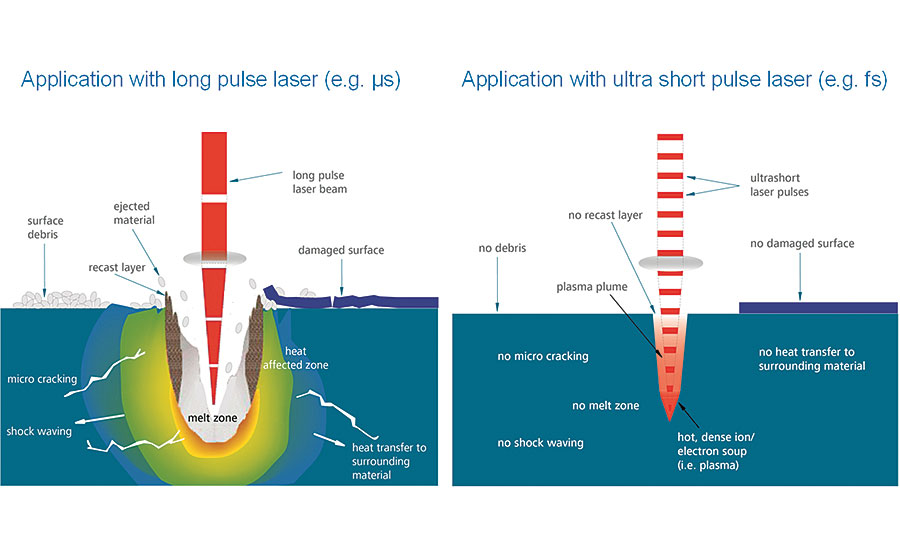
Here is a hole drilled with a long-pulse (nano-second) laser (left) and a femtosecond laser (right):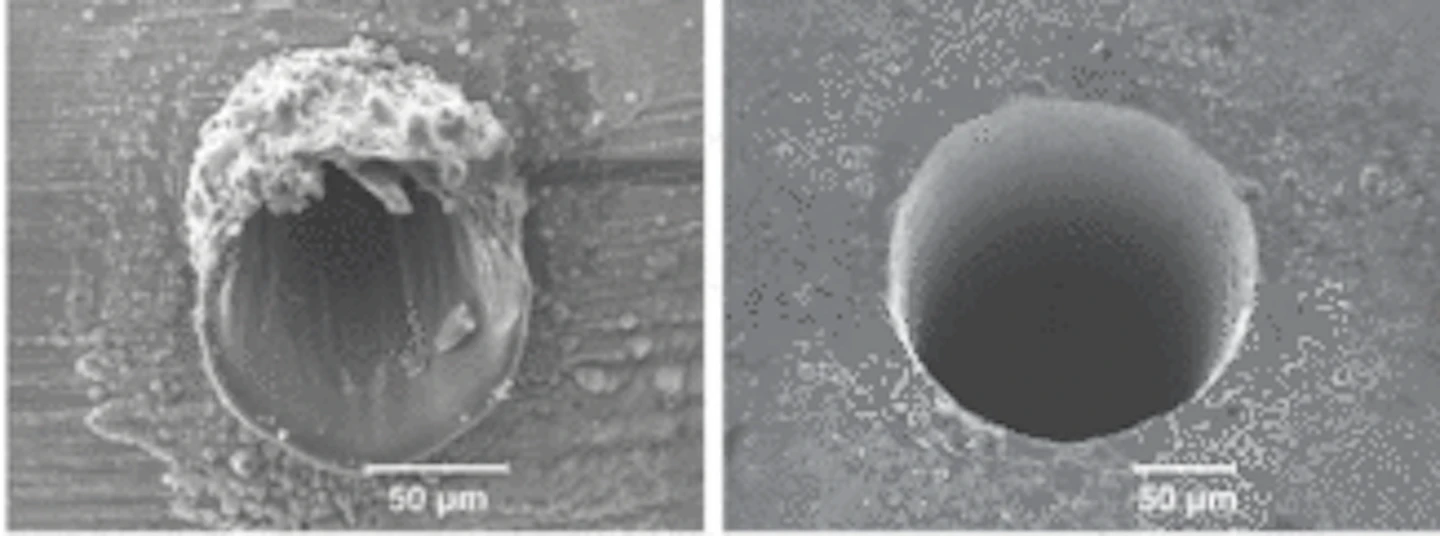
This 'cool' method of laser machining allows extremely clean micro-machining of materials with exquisite detail on the micron scale.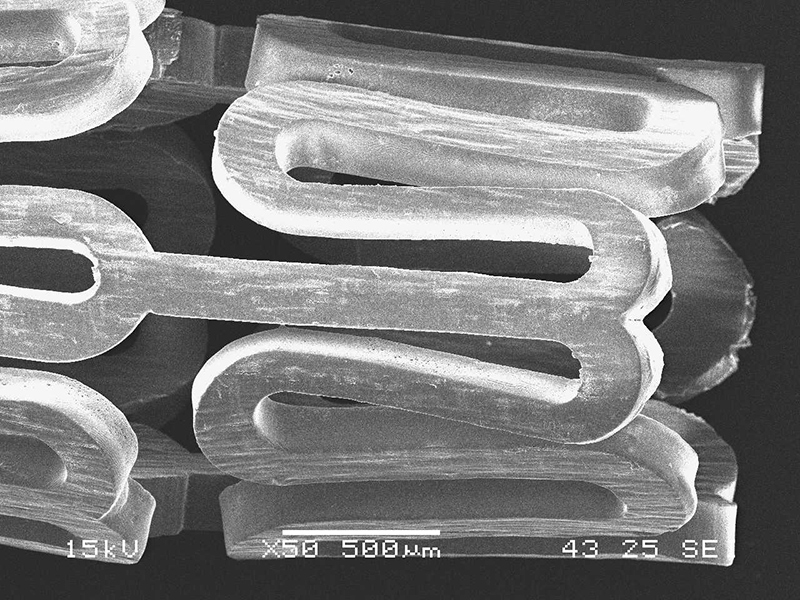
The absence of heating of surrounding material has also made ultra-short pulse lasers an extremely valuable tool in delicate surgical procedures such as eye surgery.
Femtosecond lasers can also be used to 3-d print objects with sub-micron resolution: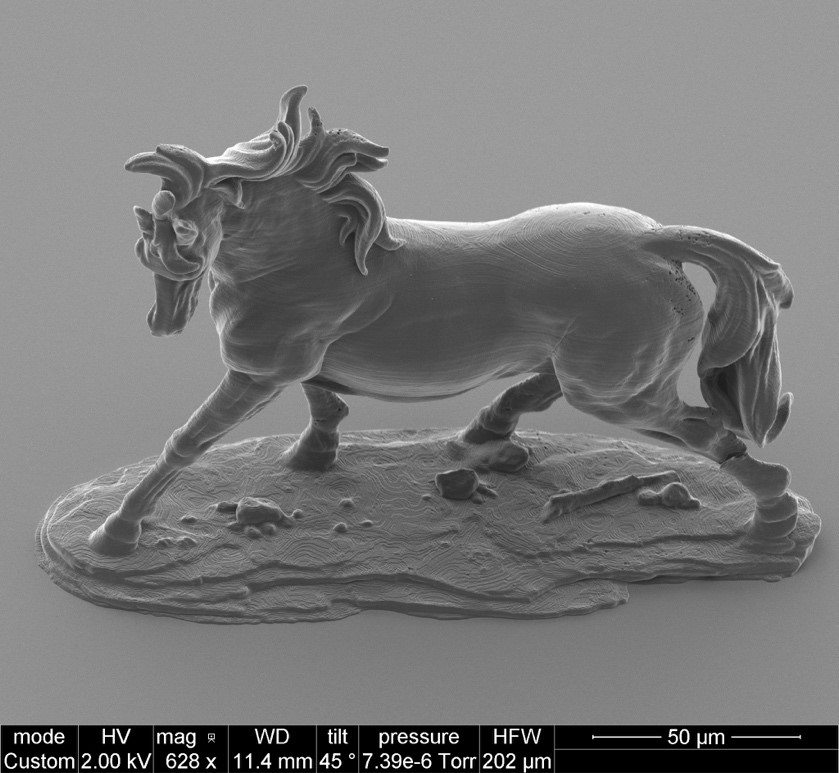
Space/Science » in reply to Power series
Manipulating and machining matter