
<
--------------
STRATFOR.com
--------------
THE INTERNET SOURCE FOR GLOBAL INTELLIGENCE
If it’s in the news, it’s too late...
The Difficulties of Firming Up Strategy in Afghanistan
October 14, 2001
Over time, wars tend to take on a definable shape. Attack leads to shock; shock leads to plans. Plans are implemented. Implementation encounters frictions, and the enemy reshapes his own strategy in response. The war begins to coalesce into a recognizable form.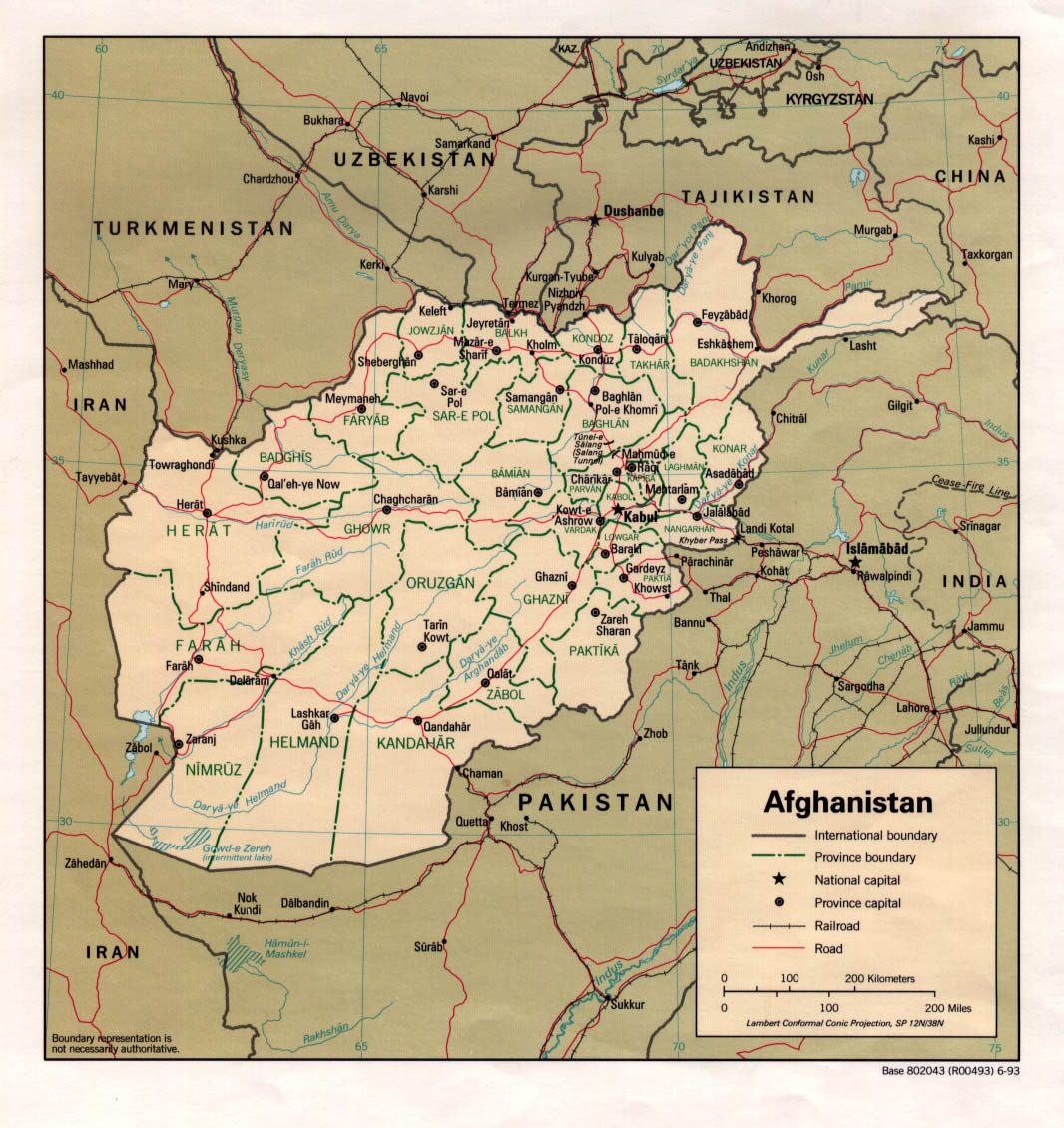
This war is different. It doesn't quite want to gel on the American side. The reason for this is that more than any other recent war, the geopolitical dimension keeps destabilizing the military dimension. To be more precise, the politics are so complex and uncertain that the United States cannot create a stable platform for military planning.
The United States has made its first response to the events of Sept. 11. The response was highly predictable, drawn from the core of American strategic doctrine. The response began with air attacks, designed to achieve command of the air so that other operations could take place unhindered. Then the attacks will move toward attacking the command and control facilities of the enemy. Finally, they turn to attacks on the enemy's ground forces.
The first phase was relatively short and effortless, given the Taliban's air defense capabilities. The second phase, now occurring, is more difficult, for the same reason that the first phase was relatively easy. The relative underdevelopment of Afghan infrastructure makes it difficult to degrade Afghan command and control capabilities. Apart from being hard to hit, the targets tend to recover fairly quickly. This has forced the United States to launch anti-army operations in parallel with counter-command and control operations.
In general, this is not a critical problem, but it does point out a peculiarity of this campaign. During both Desert Storm and Kosovo, a large part of the air campaign was carried out by ground-based tactical air power provided by the Air Force. Because of basing issues, that is not the case in this war. The Air Force's contribution is strategic air capabilities -- its bomber force -- flying extended missions from as far away as the United States. Tactical air power is being provided by the U.S. Navy, whose carriers are in the Arabian Sea.
(The Rest of the Story)
(c) 2001 Stratfor, Inc.
Dan
The Difficulties of Firming Up Strategy in Afghanistan . . .